

Geomembrane Installation: Procedures, Specifications, and Best Practices
Release time:
Dec 02,2025
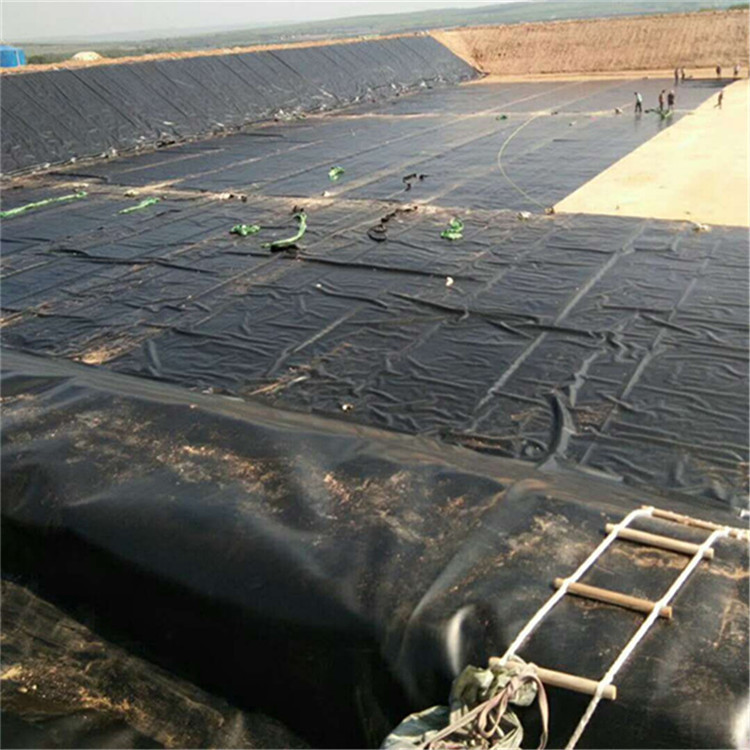
Geomembranes are impermeable polymeric sheets used extensively in environmental, hydraulic, and geotechnical engineering applications such as landfills, reservoirs, canals, and containment ponds. Proper installation is critical to ensure their long-term performance and integrity. This article outlines the standard installation methodology and provides key technical specifications.
Geomembranes are impermeable polymeric sheets used extensively in environmental, hydraulic, and geotechnical engineering applications such as landfills, reservoirs, canals, and containment ponds. Proper installation is critical to ensure their long-term performance and integrity. This article outlines the standard installation methodology and provides key technical specifications.
1. Material Specifications & Pre-Installation Requirements
Before deployment, the subgrade must be prepared to strict standards. All sharp objects, rocks (>20mm), roots, and voids must be removed. The subgrade should be compacted to ≥95% of Standard Proctor density and achieve a smooth, uniform surface with no sudden elevation changes.
Common geomembrane types include High-Density Polyethylene (HDPE), Linear Low-Density Polyethylene (LLDPE), and Polyvinyl Chloride (PVC). Their key specifications are summarized below:
Table 1: Typical Geomembrane Properties & Specifications
| Property | HDPE | LLDPE | PVC (Reinforced) | Test Method |
|---|---|---|---|---|
| Thickness | 1.5 mm - 3.0 mm | 1.0 mm - 2.5 mm | 0.75 mm - 1.5 mm | ASTM D5199 |
| Density (g/cm³) | 0.940 - 0.965 | 0.915 - 0.935 | 1.20 - 1.30 | ASTM D792 |
| Tensile Strength (Yield) | 22 - 45 kN/m | 15 - 35 kN/m | 25 - 40 kN/m | ASTM D6693 |
| Tear Resistance | 150 - 400 N | 100 - 300 N | 80 - 200 N | ASTM D1004 |
| Puncture Resistance | 500 - 900 N | 300 - 600 N | 200 - 500 N | ASTM D4833 |
| Carbon Black Content | 2.0 - 3.0% | 2.0 - 3.0% | N/A | ASTM D1603 |
All materials must be certified and accompanied by Manufacturer's Test Reports (MTRs). Rolls should be stored on flat, clean surfaces, protected from UV exposure, and inspected for damage prior to use.
2. Installation Methodology
A. Deployment and Unrolling
Rolls are deployed parallel to the slope's longitudinal axis (for sloped areas) using mechanical unrollers or manual methods on flat areas. Unrolling should be done down-slope where possible to minimize stress. The membrane must lie flat against the subgrade without tension wrinkles, but with sufficient slack (approx. 1-1.5% of length) to accommodate thermal contraction and subgrade settlement.
B. Scanning Methods
Adjacent panels are joined to form a continuous impermeable barrier. The primary methods are:
Thermal Fusion Wedge Welding: Most common for HDPE/LLDPE. A heated wedge melts the overlapping surfaces, followed by a pressure roller. A dual-track weld creates a sealed air channel for non-destructive testing.
Typical Parameters: Wedge Temperature: 350-450°C; Speed: 1.5-3.0 m/min; Overlap: 100-150mm.
Extrusion Welding: Used for detail work, patches, and complex geometries. A ribbon of molten polymer is extruded over the seam edge.
Typical Parameters: Melt Temperature: 180-220°C; Nozzle Width: ≥30mm.
Chemical/Solvent Welding: Used for PVC and other thermoplastics. A chemical agent softens the surfaces, which are then bonded under pressure.
C. Quality Control & Testing
Non-Destructive Testing (NDT): The air channel in dual-track wedge welds is pressurized to 200-300 kPa and monitored for 2-5 minutes for pressure decay.
Destructive Testing: Samples are cut from field seams daily (typically one per 150m of seam) and tested in-lab for shear and peel strength (ASTM D6392, D4437).
D. Detail Work & Anchorage
All penetrations, corners, and structures require prefabricated details. The geomembrane must be anchored in a termination trench (min. 600mm wide x 600mm deep), backfilled and compacted.
3. Post-Installation & Protection
Immediately after welding and testing, the geomembrane must be protected. For critical applications, a geotextile protection layer (min. 500 g/m²) is placed prior to backfill. The initial backfill layer (typically 150-300mm of select sand) must be placed carefully, avoiding direct drop heights >600mm. Heavy machinery must not operate directly on the exposed geomembrane.
4. Environmental Considerations
Installation should not proceed during adverse weather: rain, high winds (>40 km/h), or when temperatures are below 5°C. The geomembrane surface temperature greatly affects weld quality; parameters must be adjusted accordingly.
Conclusion
Successful geomembrane installation hinges on meticulous subgrade preparation, controlled welding by certified technicians, and an uncompromising quality assurance program. Adherence to project specifications, manufacturer's guidelines, and standard test methods (ASTM, GRI) is essential to achieve a leak-free, durable containment system.
News

Construction of Geocells: A Technical Overview with Application Guidelines
Geocells, also known as cellular confinement systems, are three-dimensional, honeycomb-like structures made from novel polymer alloys (often HDPE or polyester). When expanded and filled with soil, aggregate, or concrete, they form a rigid mattress that provides exceptional confinement, erosion control, and load distribution. This article details their key advantages, critical parameters, and a step-by-step construction methodology.

Geomembrane Installation: Procedures, Specifications, and Best Practices
Geomembranes are impermeable polymeric sheets used extensively in environmental, hydraulic, and geotechnical engineering applications such as landfills, reservoirs, canals, and containment ponds. Proper installation is critical to ensure their long-term performance and integrity. This article outlines the standard installation methodology and provides key technical specifications.

Geotextiles in Reservoir Engineering: Impermeability, Filtration, and Construction
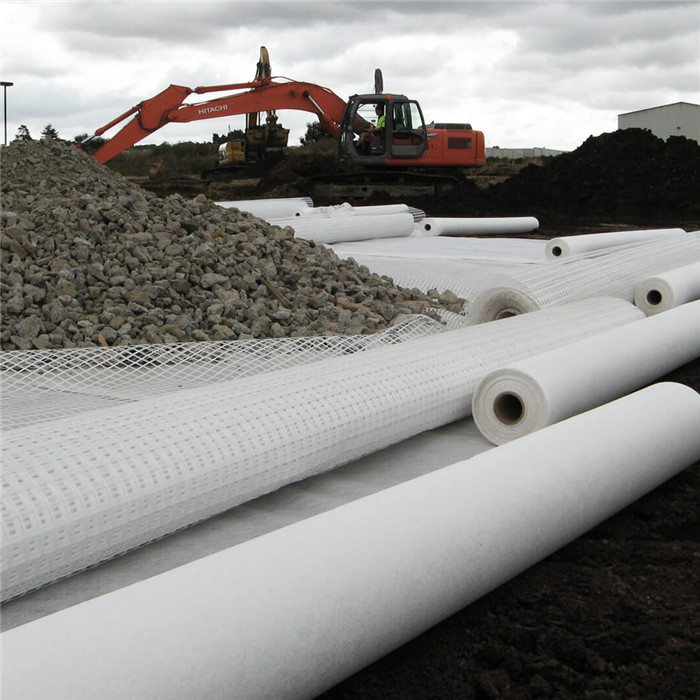
Consulting Brief: Geotextiles for Reservoir Integrity Objective: To implement a cost-effective geotextile solution for enhancing the performance and longevity of reservoir impermeable liner systems. Proposed Solution: Utilize a non-woven polypropylene geotextile as a protective and filtration layer beneath the primary HDPE geomembrane. This composite system ensures a robust and durable barrier against water seepage.
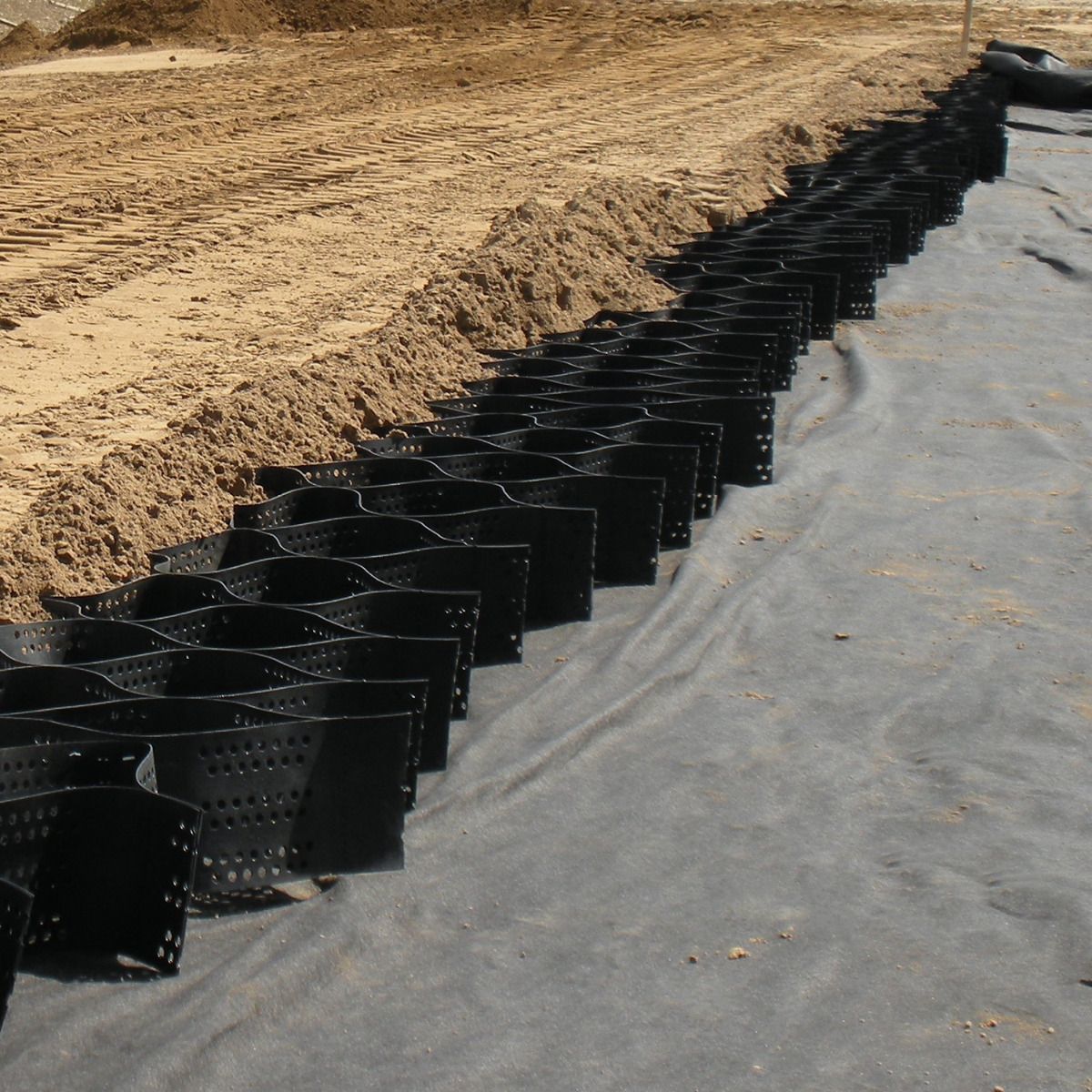
Key Advantages of Geocells for Railway Subgrade Reinforcement
Geocells, a three-dimensional cellular confinement system, offer significant advantages for stabilizing and reinforcing railway subgrades. Their unique structure provides a robust solution for challenging soil conditions.
Contact Us
Tel: +86-538-6110571
Fax: +86-538-8411002
E-mail: sales@rhgeos.com
Whatspp: 8615866038408
Address: NO.3566 Longquan Road, Tai'an Hi-tech Zone, Shandong Province, China

Copyright © Tai'an City Ruiheng Building Materials Co., Ltd.